Kentucky coffeetree (Gymnocladus dioicus)
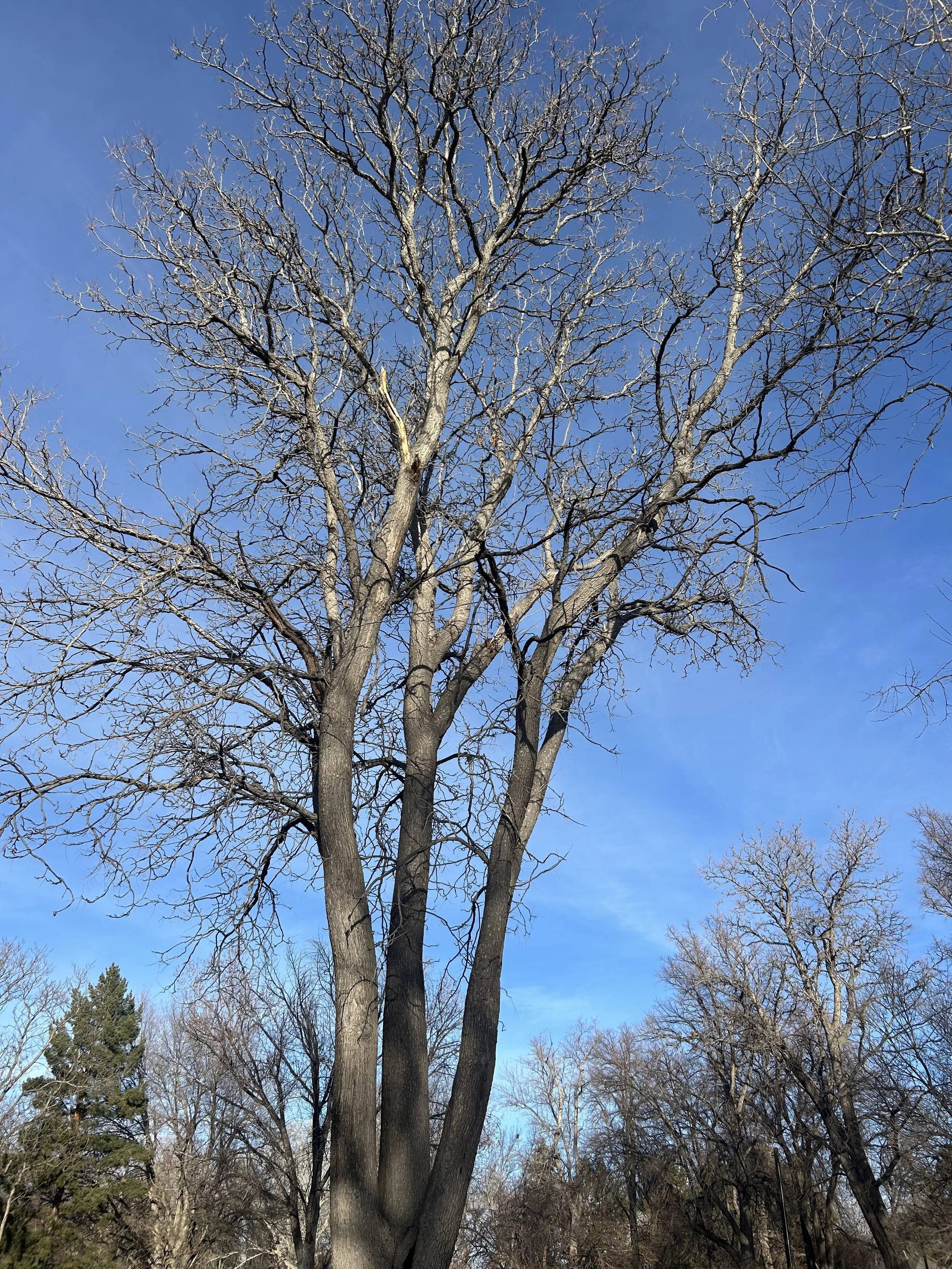
First place champion Kentucky coffeetree (Gymnocladus dioicus) in Pueblo at City Park.
Species info:
Leaves: Large, bi-pinnately compound. Can be 2 to 3 feet long and 2 feet wide.
Leaflets: The leaflets are pinnate and support a ranking of 6-14 sub leaflets,1-1/2 inches long, pointed. Margins are entire.
Leaf Surface: Blueish-green.
Buds: Small and sunken. Born on stout twigs with large leaf scars and vascular bundles.
Bark: Smooth and brown on young branches. Older stems are furrowed with a blocky, scaly appearance. It is very distinctive and attractive.
Flowers: Inconspicuous; appear before leaves. Produce samaras ~½" long with a thin oval wing, hairy-fringed and notched at the tip.
Fruit: On female trees, a leathery, brownish-black pod is produced.
Botanical: Gymnocladus dioicus
Family: Fabaceae
Mature Height: 60–75 feet
Canopy Spread: 40–50 feet
Foliage Type: Deciduous
Tree Shape: Obovate
Growth Rate: Slow to medium. Once established, it can grow a foot or so per year in Colorado.
Flower: Interesting, but not showy
Fruit: Persistent on female trees.
Fall Color: Yellow
Water Use: Low to moderate.
Hardiness: Zones 3 to 8.
Soil Preference: Adapts well to a variety of climates and soils.
Sun Exposure: Full sun
Wildlife Value: Seeds eaten by birds and small mammals; provides habitat and nesting sites due to its broad branching architecture
Pests/Pathogens: Little to none noted.
Planting Recommendations: Recommended for most sites along the Front Range and on the Western Slope.
Information Sources:
Front Range Tree Recommendation List
Michael Dirr, Encyclopedia of Trees & Shrubs. 2011. Timber Press.