Rocky Mountain maple (Acer glabrum)
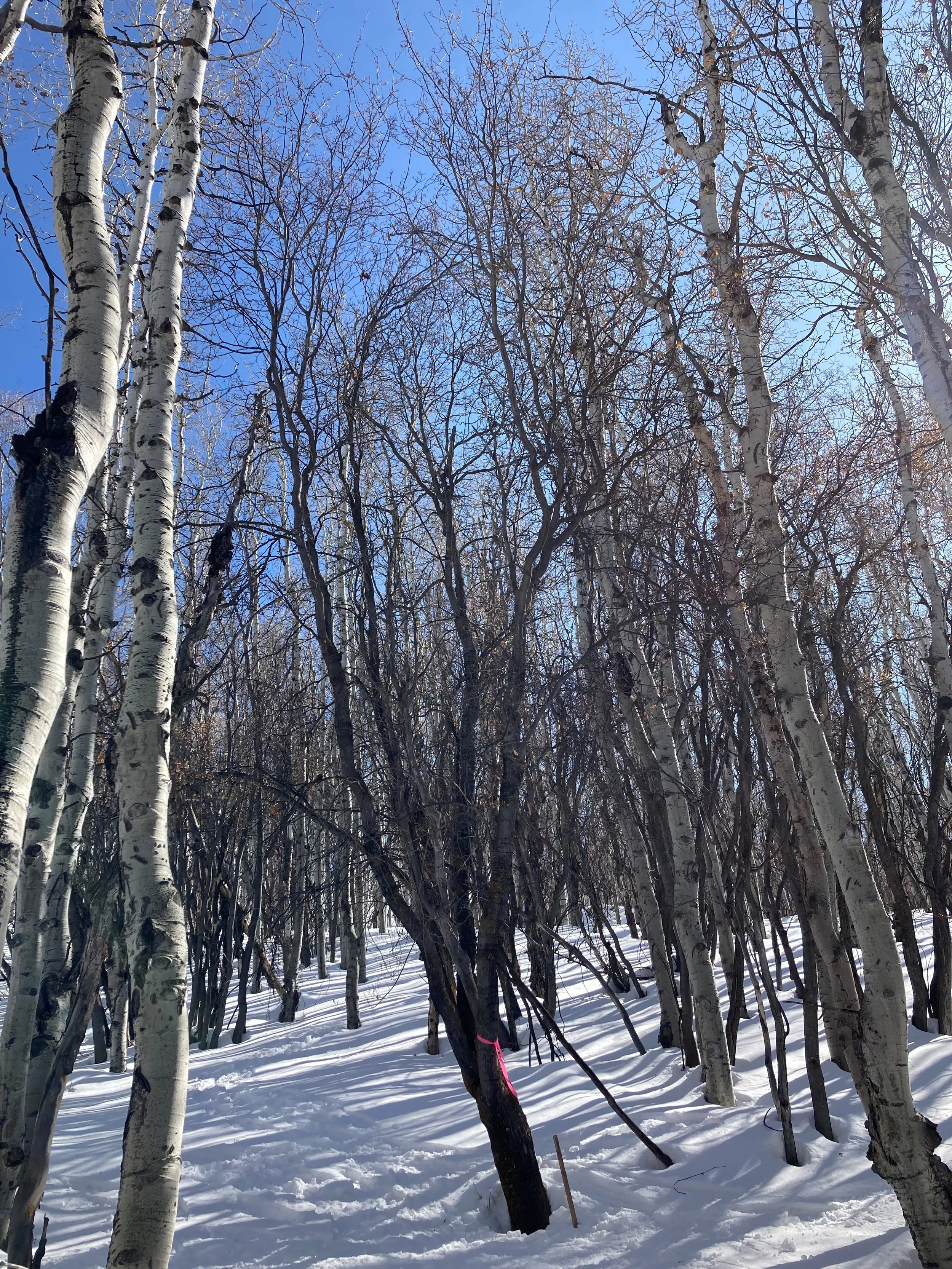
First place champion in Crawford.
Species info:
Leaves: Opposite, simple, 3 to 5 inches in diameter, sharply 3 to 5-lobed or rarely 3-parted or even divided
Leaflets: N/A (simple leaves)
Leaf Surface: Shiny dark green above, paler or whitish beneath
Twig: Reddish brown, slender
Bark: Gray or brown; smooth, thin
Flowers: Small, greenish-yellow clusters appearing with new leaves in early spring
Fruit: A 1-seeded winged samara with wings spread slightly; reddish, turning light brown
Botanical: Acer glabrum
Family: Sapindaceae
Mature Height: Typically around 35 feet
Canopy Spread: 25–35 feet, depending on cultivar.
Foliage Type: Deciduous
Tree Shape: Shrubby or small tree with upright branching
Flowers: Inconspicuous
Fruit: None
Fall Color: Attractive, red or yellow
Water Use: Moderate to high; prefers moist, well-drained soils
Hardiness: Zones 3–7 (depending on cultivar); recommended below 7,500 ft elevation.
Soil Preference: Best in neutral to slightly acidic soils; prone to chlorosis in alkaline conditions (pH > 7.4).
Wildlife Value: Attracts pollinators in spring; samaras eaten by birds and small mammals.
Pests/Pathogens: Generally pest-free.
Colorado Suitability: This Colorado native is recommended for most sites, but prefers moist soils.
Planting recommendation: Conditionally recommended for the Front Range, as it requires acidic soils
Information Sources:
C. Frank Brockman. Trees of North America. Golden Press. Western Publishing Company, Inc. 1986.
Stephen Whitney and Elbert L. Little. Western Forests. Chanticleer Press, Inc. 1985.